Nepal’s bogus orphan trade fuelled by rise in ’voluntourism’
Source: theguardian.com
Like an increasing number of tourists visiting Nepal’s mountain peaks, colourful markets and lush national parks, Marina Argeisa wanted to experience the latest must-do activity on the tourist trail: a volunteering stint at an orphanage.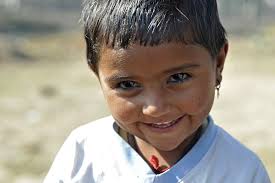 What the 26-year-old Spaniard did not know was that her good intentions were unwittingly feeding an industry that dupes poor parents into sending their children to bogus orphanages in order to extract money from well-meaning foreigners.
It is a business model built on a double deception: the exploitation of poor families in rural Nepal and the manipulation of wealthy foreigners. In the worst cases, tourists may be unwittingly complicit in child trafficking.
Nepal’s tourist sector comprises nearly 3% of its gross domestic product, and in 2012 more than 600,000 foreigners visited the tiny country.
Volunteering, or voluntourism as it is sometimes known, is a rapidly expanding industry. There are dozens of agencies offering the chance to spend weeks, or months, working at some of the country’s 800 orphanages.
More than 80% of these institutions are located in the most popular tourist hotspots: the ancient Kathmandu Valley; the trekking capital of Pokhara; and Chitwan, home to the largest national park. Child rights campaigners claim the country is also home to numerous unregistered orphanages.
Yet many of the occupants of these sites have at least one living parent. The latest investigation by Unicef, the UN’s children agency, found that 85% of children in the orphanages they visited had at least one living parent.
The trade in children begins in Nepal’s remote and impoverished countryside, where parents are tricked into sending their children to orphanages, often lured by the promise of an education.
Lojung Sherpa sent three of her children to the Happy Home orphanage in the capital after she was told that foreigners would educate them and raise money for one of her daughters, who has a serious medical condition. But when Sherpa spoke to her daughter some time later, she was told that all donations towards her treatment had been taken by the orphanage’s owner.
Sherpa travelled to Kathmandu to remove her children from the home but was repeatedly turned away. After an investigation, which resulted in the arrest of the orphanage owner on charges of child abduction and fraud, police officers discovered that Sherpa’s children were missing. The youngsters were later found at various locations across the city, where they had been hidden, and eventually reunited with their mother.
Philip Holmes, chief executive of Freedom Matters, the charity that instigated the inquiry into Happy Home, said that in the worst cases this practice constituted child trafficking.
"Once a child enters an orphanage, he or she seems to become the property of the orphanage owner ... [In effect], they become prisoners of the orphanage," he said. "[They] use the children as an income source, through the sponsorship of children who are presented as being orphans when they are not … and through the exploitation of overseas volunteers."
[...]
Read the full article at: theguardian.com
Tune into Red Ice Radio:
Sandy Frost - The Corruption of the Royal Order of Jesters & Non-profit Organizations
Barbara Oakley - Pathological Altruism
Dr. Leonard Horowitz - The Pharmaceutical Industry, Vaccines & Frequency 528
Brian Gerrish - Common Purpose & Neuro Linguistic Programming
David Icke - The Hollie Greig Case & The Scottish Elite Connections to the World Wide Satanic Pedophile Network
Rudy Mazzocchi - Black Market of Human Organ Transplants