Stone Age DNA shows hunter-gatherers shunned farming
Source: newscientist.com
How did farming take over the world? One theory is that farming was such an evidently good idea that it spread on its own. As hunter-gatherers encountered farmers, they were converted to an agricultural way of living. But a large-scale genetic analysis of Stone Age remains in Sweden suggests that this wasn’t the case.
Instead, it seems like early farmers and hunter-gatherers had deep-rooted genetic differences. This suggests that European farmers were so successful that they displaced hunter-gatherers as they spread across the continent.
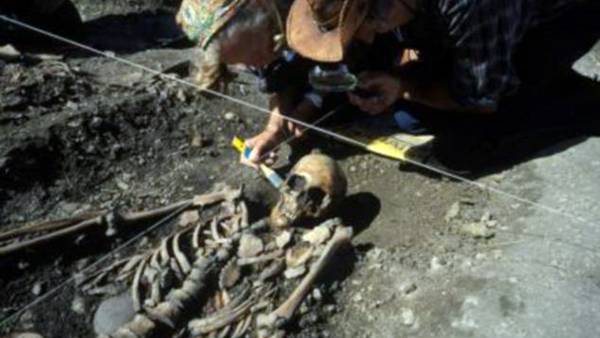
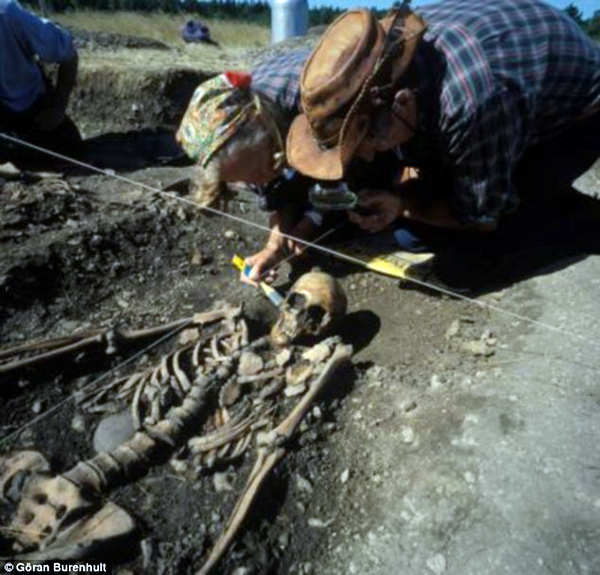
Pontus Skoglund of Uppsala University in Sweden and his colleagues sequenced the DNA from 11 early hunter-gatherers and farmers dating back to between 5000 and 7000 years ago. Four were associated with late Stone Age farming settlements; seven were identified as coastal hunter-gatherers.
DNA analysis showed that the farmers and hunter-gatherers descended from distinct genetic lineages. "It is quite clear that the two groups are very different," says Skoglund. Comparisons with the genes of modern populations revealed them to be more distinct that the genomes of modern Scandinavians and Italians.
Previous analyses of the isotopes in the bones of the 11 Stone Age individuals also showed the hugely different diet the two groups had. The hunter-gatherers relied primarily on seals and fish, while the farmers ate mostly land protein – presumably from the animals that they took care of.
Assimilation
"More interesting, here we find much lower genomic variation among the hunter-gatherers than among the farmers," says Anders Götherström of Stockholm University, one of the authors of the paper.
That means the hunter-gatherers were all very closely related to each other, which generally indicates a small population living in small groups.
Götherström thinks there are a few possible explanations. One is that after humans left Africa, some flourished by becoming farmers and exploiting the fertile lands they found in the Near East. Others ventured further north, where they continued to rely on the wild animals they killed and the plants and berries they collected from the landscape. These groups were split into small populations that survived in isolation between the ice sheets.
The Swedish data shows some mixing between the two groups, suggesting that as the farmers later swept north they interbred with the hunter-gatherers they encountered and assimilated them into their cultures. The exchange seems to have been unidirectional: there is very little if any evidence that farmers were assimilated into the hunter-gatherers.
The findings support previous studies of other early farmer and hunter-gatherer populations in Germany and elsewhere, says Joachim Burger of Johannes Gutenberg University of Mainz in Germany.
Journal reference: Science, DOI: 10.1126/science.1253448
Source: New Scientist